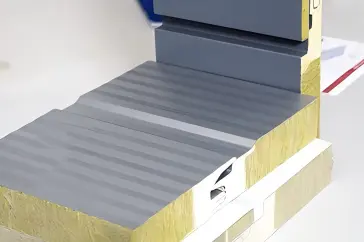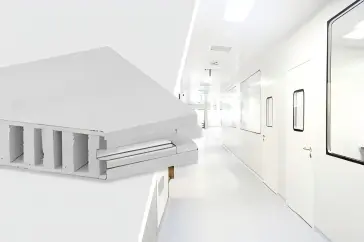
Every “top manufacturers” list in the metal insulated panel industry tends to blend two very different products together: cold-storage sandwich panels built purely for thermal performance, and стеновые сэндвич-панели built to be looked at — the facades of warehouses, offices, showrooms, and factories that clients actually judge a building by. This guide keeps the focus narrow. We’re ranking the ten manufacturers that specifically stand out in wall and facade cladding: how clean the joint lines are, how the coatings hold their color after a decade of UV exposure, and how flexible the profile and color options are for architects.
The result is a mix of long-established European facade specialists, a Middle Eastern PEB heavyweight, and fast-growing Chinese exporters — Glostar among them — that have narrowed the technical gap on concealed-fastener systems while keeping landed costs competitive for overseas buyers.
It’s worth being upfront about how this list was built, since most “top 10” roundups in this industry are really just repackaged lists of the biggest steel producers with a panel division attached. Instead, the manufacturers below were chosen specifically for their wall and facade cladding work — the aesthetic, coating, and fastening decisions that matter once a building’s structure is finished and its street-facing appearance becomes the client’s main concern. That’s why some names that dominate general “insulated sandwich panel” rankings (pure cold-storage or roofing specialists, for instance) don’t appear here, while a few facade-focused brands that rarely make broader industry lists do.
What Makes a Wall Sandwich Panel Different From a Roof or Cold-Storage Panel?
A wall sandwich panel shares the same basic sandwich structure as a roof or cold-room sandwich panel — two pre-coated metal skins bonded to a rigid insulation core, usually PU/PIR, EPS, or rock wool — but it is engineered around a different priority: appearance and detailing, not just R-value. Three things separate a good facade wall sandwich panel from a generic industrial one:
- Fastening system. Сэндвич-панели для кровли are almost always exposed-fastener. Facade sandwich panels increasingly use concealed, tongue-and-groove or secret-fix joints so the screws disappear and the wall reads as one continuous surface.
- Coating chemistry. A roof sandwich panel in a rural warehouse can survive on a basic polyester (PE) coating. A street-facing wall sandwich panel in a coastal or high-UV city needs SMP, HDP, or PVDF coatings to avoid chalking and color fade within a few years.
- Profile and color range. Flat, ribbed, micro-rib, and shadow-line profiles, plus RAL color matching, let architects use the panel as a design element rather than hide it behind render or brick veneer.
With that lens, here’s how the ten manufacturers stack up in 2026.
2026 Ranking Table: Top 10 Wall Sandwich Panel Manufacturers
| Manufacturer | Headquarters | Signature Facade Strength | Идеально подходит для |
|---|---|---|---|
| Kingspan Group | Ireland | Karrier architectural range, global fire certifications | Architectural insulated panel systems |
| Trimo Group | Slovenia | Trimoterm FTV Invisio secret-fix fireproof facade | Mineral wool insulated panels with concealed-fixing options |
| Kalzip | Germany / UK | Standing-seam aluminium facade systems | Aluminium roof and facade systems; not a direct insulated sandwich panel equivalent |
| Alucobond (3A Composites) | Switzerland / Germany | Lightweight aluminium composite (ACM) cladding | Curtain-wall look on a lighter structure |
| ArcelorMittal Construction | Luxembourg | Promisol secret-fix panels, in-house steel coating | Promisol insulated wall sandwich panels and coated-steel options |
| Isopan (Manni Group) | Italy | Ventilated facade & Italian design aesthetics | Urban regeneration & mixed-use buildings |
| Joris Ide | Belgium | Wide horizontal/vertical wall profile range | European commercial & agricultural buildings |
| Assan Panel | Turkey | Cost-competitive supply into Europe, the Middle East & Africa | Regional distributors bridging EU & MEA specs |
| Zamil Steel | Saudi Arabia | Integrated PEB wall panel + steel structure packages | Gulf industrial parks & turnkey steel buildings |
| Glostar | China | Concealed-fastener PVDF/SMP wall cladding at export pricing | Wall sandwich panels and project-specific supply support |
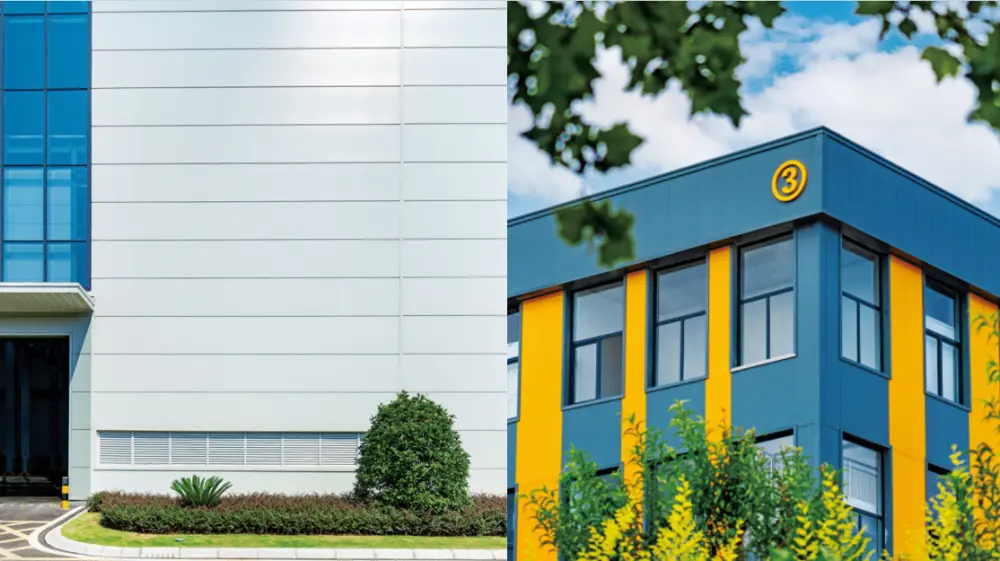
Kingspan Group
Headquarters: Kingscourt, Ireland | Founded: 1965 | Website: kingspan.com
Kingspan offers insulated wall sandwich panel systems for industrial and architectural applications. Buyers should distinguish between products intended as finished external wall surfaces and systems designed to support an additional facade finish. When comparing a specified Kingspan product with an alternative, review the exact panel construction, thermal performance, fire documentation, joint details and warranty conditions.
Trimo Group
Headquarters: Trebnje, Slovenia | Website: trimo-group.com
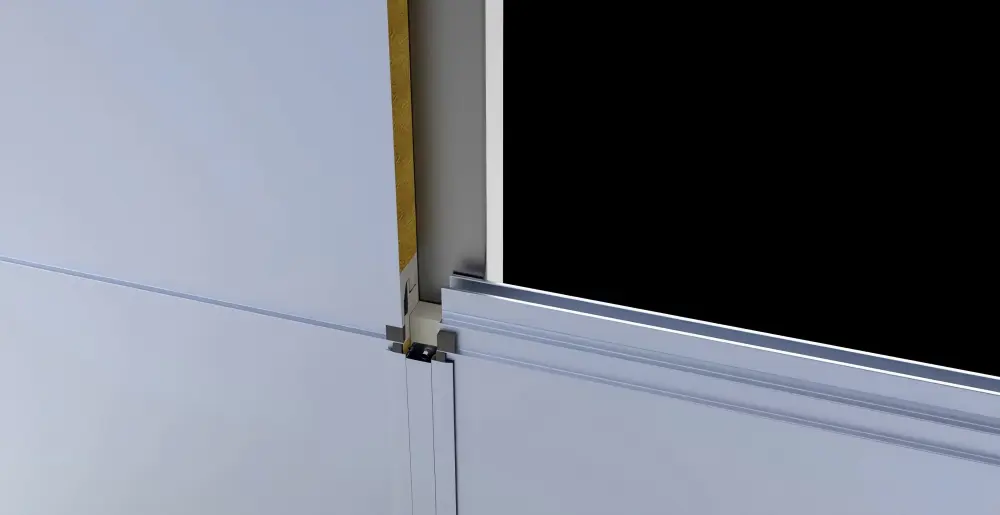
Trimo is less known outside Europe but is a genuine specialist in one thing: fire-rated, joint-free facades. Its Trimoterm FTV Invisio system uses a hidden fixing detail so no fasteners are visible from the exterior, and the sandwich panel core is built around non-combustible mineral wool for projects where fire classification cannot be compromised. For architects designing schools, hospitals, or public buildings across Central Europe, Trimo is frequently the first name that comes up.
Kalzip
Headquarters: Koblenz, Germany (commercial base in the UK) | Website: kalzip.com
Kalzip approaches wall cladding from a different angle than most names on this list — standing-seam aluminium rather than a bonded insulated core. Its formability lets architects wrap curved, angled, or diamond-pattern elevations that would be impossible with flat sandwich panels, and more than 110 million square meters have reportedly been installed worldwide. It’s a niche choice, but for sculptural building envelopes — airport terminals, museums, stadium roofs that wrap down into walls — it has few real competitors, and the aluminium substrate holds up well in coastal locations where steel-cored panels need heavier protective coatings.
Alucobond (3A Composites)
Headquarters: Switzerland / Germany | Website: alucobond.com
Alucobond popularized the aluminium composite panel look — two thin aluminium skins around a lightweight polymer core — that now defines a huge share of modern curtain-wall and rainscreen facades. Panels can be routed, folded, and shaped on site, and the brand’s color and metallic finish library is one of the deepest in the industry. It’s technically a lighter-duty product than a structural insulated wall sandwich panel, but for pure design flexibility on non-load-bearing cladding it’s hard to beat.
ArcelorMittal Construction
Headquarters: Luxembourg | Website: buildingsolutions.arcelormittal.com
As the construction arm of one of the world’s largest steel producers, ArcelorMittal controls its coil coating in-house, which shows up as unusually consistent color batches across large orders — a real advantage on facades where two container loads of panel need to match exactly. Its Promisol secret-fix line targets the same joint-free aesthetic as Trimo and Kingspan, backed by ArcelorMittal’s own proprietary anti-corrosion coatings for coastal or industrial sites.
Isopan (Manni Group)
Headquarters: Trevenzuolo, Italy | Website: isopan.com
Isopan brings a distinctly Italian design sensibility to wall sandwich panels, and its ADDWind ventilated facade system is built specifically for urban regeneration projects where an old industrial building is being re-clad rather than demolished. The “Leaf” insulation technology trims panel thickness while holding thermal performance, which matters on retrofits where wall depth is constrained by an existing structure. Isopan’s regional plants across Europe and Latin America also mean shorter lead times for projects outside its home Italian market, an advantage that pure export manufacturers further afield can’t always match.
Joris Ide
Headquarters: Zwevegem, Belgium | Founded: 1985 | Website: www.joriside.com
Joris Ide is one of Europe’s higher-volume wall cladding producers, and its JI Wall range lets facades combine horizontal and vertical panel orientations with matching trims and accessories — a detail that keeps commercial buildings looking coordinated rather than assembled from mismatched parts. It’s less of a headline “prestige” brand than Kingspan or Trimo, but it’s a dependable mid-market option across the EU.
Assan Panel
Headquarters: Türkiye | Founded: 1990 | Website: assanpanel.com
Turkey’s manufacturing base and geography give Assan Panel a logistics edge many European and Chinese suppliers can’t match: shorter shipping lanes into both the EU and the Middle East. The company has built a reputation on energy-efficient wall systems priced below the legacy Western European brands, making it a common shortlist name for contractors working across both regions on the same project. Assan Panel is also frequently specified where a project needs a supplier familiar with both EU harmonized standards and Gulf building codes, saving the back-and-forth of re-certifying a product for a second market.
Zamil Steel
Headquarters: Dammam, Saudi Arabia | Founded: 1977 | Website: zamilsteel.com
Zamil Steel isn’t primarily a panel brand — it’s one of the region’s largest pre-engineered building (PEB) manufacturers, and its wall sandwich panels are sold as part of a complete steel building package rather than standalone. For Gulf-based industrial and logistics developers, that bundling is the whole appeal: one contract covers the structure, the roof and wall cladding, and the accessories, with a single point of accountability for the finished envelope.
Glostar
Headquarters: Shandong, China | Founded: 2014 | Website: www.glostarpanels.com
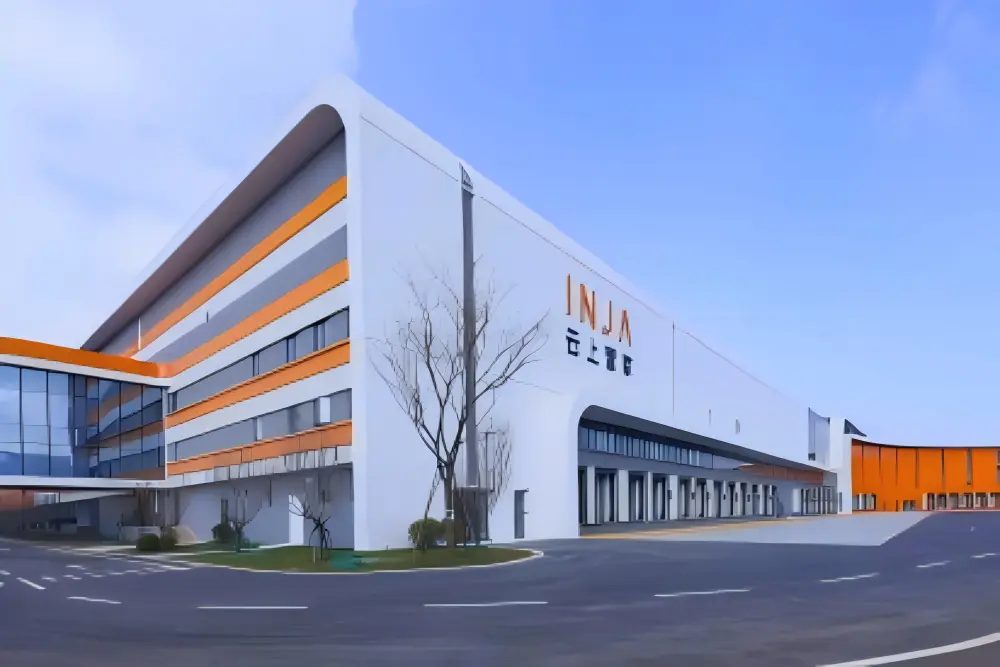
Glostar’s architectural metal insulated wall sandwich panel is where the company has gone after the same joint-free look that Kingspan, Trimo, and ArcelorMittal charge a premium for — concealed fasteners, PVDF or SMP color-coated steel skins, and RAL-matched finishes — but manufactured on automated production lines in Shandong at factory-direct pricing. For buyers in the world who don’t need a European certification stack but do need sandwich panels that pass CE and ISO checks and hold their color under strong sun, that combination has made Glostar a recurring name on shortlists next to more established brands.
Where Glostar tends to differentiate on wall projects specifically:
- Concealed-joint architectural profiles that give facades a flush, seamless appearance without the cost of a European secret-fix system.
- Full coating range — PE for standard inland builds up to PVDF for coastal or high-UV facades — specified per project rather than a one-size-fits-all default.
- Export-optimized packaging, with container loading plans designed to cut freight cost per square meter on large facade orders.
- Direct project support, including CAD drawings and technical data sheets, for contractors who don’t have an in-house facade engineering team.
Regional Sourcing Patterns Behind This List
Where a project sources its wall sandwich panels from usually says as much about the supply chain as it does about the panel itself. A few patterns stand out across the manufacturers above:
Europe still sets the design language. Trimo, Kalzip, Alucobond, Isopan, and Joris Ide are all headquartered within a few hundred kilometers of each other, and it shows — European architects continue to push the concealed-fastener, flat-panel aesthetic that’s now being copied globally. If a project’s design brief was drawn up by a European or European-trained architect, there’s a good chance the reference photos in that brief came from one of these five brands.
The Gulf and North Africa lean on bundled PEB packages. Zamil Steel’s model — structure, roof, and wall cladding sold as one contract — reflects how much of the region’s industrial construction actually gets built: developers want a single accountable supplier rather than coordinating separate steel and cladding contracts, especially on fast-track logistics and manufacturing projects.
Turkey and China have become the price-competitive middle ground. Assan Panel’s geography puts it within reach of both the EU and Middle Eastern markets without EU manufacturing costs, while Chinese exporters like Glostar have invested specifically in matching European facade detailing — concealed joints, PVDF coatings, RAL color matching — rather than only competing on basic industrial panels. For a contractor bidding a project in Southeast Asia, the Middle East, or South America, that combination often changes which manufacturer actually makes the shortlist versus which one only appears in the RFP as a benchmark.
Certification is converging faster than pricing. Ten years ago, “does the manufacturer hold CE certification” was a real filter that eliminated most non-European suppliers. In 2026, CE and ISO documentation is close to table stakes across every manufacturer on this list — the differentiator has shifted to lead time, container-loading efficiency, and how responsive the supplier’s technical team is with CAD drawings and sample panels during the bidding stage.
Buyer’s Guide: How to Evaluate a Wall Sandwich Panel Supplier
1. Match the coating to the climate, not the price list
Select the coating system according to the project’s UV exposure, coastal or industrial environment, maintenance plan and expected service conditions. Ask for the coating designation, substrate protection, warranty terms and exclusions. Do not assume that PE, SMP, HDP or PVDF alone determines service life or suitability.
2. Decide between exposed and concealed fasteners early
Exposed-fastener sandwich panels are cheaper and faster to install and are perfectly acceptable on the sides and rear of an industrial building. Concealed-fastener (secret-fix) panels cost more per square meter but are worth it on any street-facing elevation — the flat, joint-free surface is often the single biggest factor in how “high-end” a metal-clad building looks from the outside.
3. Ask for the fire classification, not just “fireproof”
“Fireproof” isn’t a standard — ask for the actual EN 13501-1 or equivalent classification, and confirm whether the core is rock wool (A-class, non-combustible), PIR (fire-retardant, chars rather than melts), or EPS (limited fire resistance, increasingly restricted on multi-story facades).
4. Request a physical sample before ordering a container
A technical data sheet can’t tell you whether the foam is fully bonded to the steel skin or whether the color match is accurate under natural light. Every manufacturer on this list, from Kingspan down to regional suppliers like Glostar and Assan Panel, will send a cut sample on request — it’s a normal part of the sourcing process, not an unusual ask.
5. Check the sandwich panel’s actual U-value at your specified thickness, not the marketing number
Manufacturers often publish their best-case U-value for the thickest panel in their range. Ask for the specific thermal performance at the thickness you’re actually ordering, and confirm whether the figure includes thermal bridging at the joints — a concealed-fastener panel with a well-designed joint can outperform a thicker exposed-fastener panel simply because it loses less heat at the seams.
6. Confirm certification relevant to your project’s country
CE marking covers the EU; projects in the US or Gulf states often also require FM Approvals or ASTM test reports. Chinese exporters that regularly ship to Europe and the Middle East, including Glostar and Wiskind, typically hold both CE and ISO documentation, but it’s worth confirming the specific test reports for your panel thickness and core type rather than assuming blanket coverage.
Часто задаваемые вопросы
Q1: What’s the actual difference between a “wall” sandwich panel and a “roof” sandwich panel?
They often share the same core material, but wall sandwcich panels use profiles and coatings chosen for visible facades — flatter surfaces, concealed-joint options, and higher-grade coatings — while roof panels prioritize water shedding, screw-down strength, and slope compatibility.
Q2: Do concealed-fastener wall sandwich panels cost much more than exposed-fastener panels?
Typically 15–30% more per square meter depending on the manufacturer and profile, mainly due to the more complex joint tooling and installation labor. Most contractors reserve concealed-fastener panels for street-facing elevations and use standard exposed-fastener panels on rear and side walls.
Q3: Can a Chinese manufacturer’s wall sandwich panels really match European facade quality?
On the core technical specs — steel thickness, coating type, foam density, fire rating — yes, when the manufacturer holds CE and ISO certification and provides third-party test reports. Manufacturers like Glostar and Wiskind have specifically built architectural wall sandwich panel lines aimed at closing that gap for export markets, though buyers should still request samples and documentation rather than taking any brand’s claims at face value.
Q4: How long does a coated wall sandwich panel actually keep its color?
A PVDF-coated sandwich panel typically holds its color for 20+ years with minimal chalking. SMP coatings are usually rated for 15–20 years, and basic PE coatings are more in the 8–12 year range before visible fading, depending on UV exposure and coastal salt exposure.
Q5: Is it worth paying more for a facade specialist over a general sandwich panel supplier?
It depends on how visible the wall will be. For rear or side elevations on an industrial shed, a general-purpose sandwich panel from any reputable supplier is fine. For street-facing facades, showrooms, or corporate buildings where appearance affects leasing or brand perception, the extra cost of a facade-focused manufacturer’s concealed-joint system and premium coating is usually recovered many times over in how the finished building looks and how long it looks that way.
Заключение
There isn’t a single “best” wall sandwich panel manufacturer in 2026 — there’s a best manufacturer for a given facade brief. Kingspan and Trimo make sense when certification depth and brand assurance matter most; Kalzip and Alucobond are the go-to names when the architecture calls for curves or metallic finishes rather than flat panels; and manufacturers like Assan Panel, Zamil Steel, and Glostar are increasingly winning projects where the buyer needs the same architectural fastening and coating options at export-friendly pricing. Whichever direction a project goes, the fundamentals stay the same: match the coating to the climate, decide on fastener visibility early, and always ask for a physical sample before the container ships.