Choosing a reliable steel structure manufacturer in China is a critical step for contractors, EPC companies, developers, and industrial project owners planning large-scale construction projects.
Whether you are building an industrial warehouse, manufacturing facility, logistics center, or commercial building, selecting the right supplier involves much more than comparing steel prices.
Structural engineering capabilities, fabrication accuracy, quality control, production capacity, and international project experience all affect construction quality, project schedules, and overall costs.
China has an extensive steel fabrication industry, but manufacturers differ in technical capabilities, production processes, and project management experience.
This guide explains how to evaluate steel structure manufacturers in China, identify reliable suppliers, compare technical quotations, and select a suitable partner for industrial and commercial steel building projects.
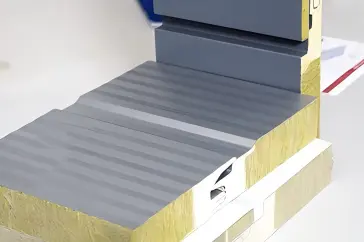
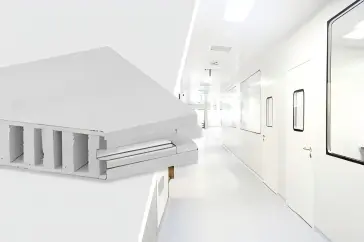
What is a steel structure manufacturer in China? A steel structure manufacturer in China is a factory that fabricates structural steel components, such as H-section columns, rafters, purlins, bracing, and connection plates, according to approved engineering drawings, and exports them for assembly at the project site. Many also supply roof and wall systems, including painéis sanduíche isolados, so that the frame and the building envelope come from one source.
Key Takeaways
- Verify engineering capability, fabrication capacity, and documented quality control before comparing prices.
- Confirm which design standards apply at the project location (for example AISC, Eurocode, or a local building code) and who is responsible for design approval.
- Compare quotations on the same scope: steel tonnage, steel grade, surface treatment, engineering services, envelope, freight terms, and exclusions.
- Request an Inspection and Test Plan (ITP), material certificates, and verifiable project references, and consider a factory audit or third-party inspection.
- The best steel structure manufacturer in China is the one that meets your technical, quality, delivery, and budget requirements, not necessarily the cheapest one.
Quick Answer: How to Choose a Reliable Steel Structure Manufacturer in China
A reliable steel structure manufacturer should demonstrate strong engineering coordination, suitable manufacturing capacity, documented quality control, relevant project experience, and the ability to meet project-specific construction standards.
For large industrial projects, evaluate these seven factors:
- Structural engineering and technical capabilities
- Steel fabrication facilities and production capacity
- Material quality, welding processes, and inspection procedures
- Compliance with applicable international standards
- Experience with similar industrial steel buildings
- Export logistics, delivery, and installation support
- Transparent quotations and clearly defined supply responsibilities
The most suitable steel structure manufacturer is not necessarily the one offering the lowest price, but the one capable of meeting your project’s technical, quality, delivery, and budget requirements.

Why Source Steel Structures from a China Steel Structure Manufacturer?
China is the world’s largest steel producer, accounting for roughly half of global crude steel output according to worldsteel data. This scale supports a deep supply chain of steel mills, fabrication plants, coating facilities, and export ports.
For international buyers, the main advantages of working with a China steel structure manufacturer are:
- Production scale: large fabrication plants can handle projects ranging from a single warehouse to multi-building industrial parks.
- Integrated supply: many suppliers can provide the steel frame, roof and wall panels, and accessories together, which simplifies coordination.
- Export experience: established exporters are familiar with packing, container and breakbulk loading, and shipping documentation.
- Cost competitiveness: when the scope and specification are aligned, buyers can compare quotations on a consistent basis.
The trade-off is that quality, engineering depth, and documentation practices vary widely between factories. That is why a structured evaluation, covered in the seven sections below, matters more than the quoted price alone.
Evaluate Structural Engineering and Design Capabilities
Structural engineering is one of the most important considerations when selecting a prefabricated steel structure manufacturer.
Large industrial buildings require structural systems designed according to specific building dimensions, environmental conditions, operational loads, and applicable construction regulations.
A qualified manufacturer should be able to coordinate engineering information and prepare fabrication drawings based on approved structural designs.
Structural Design and Load Requirements
Before evaluating a manufacturer, confirm its experience with the following technical requirements:
- Wind loads and snow loads
- Seismic design requirements
- Building spans and column spacing
- Structural stability and bracing systems
- Roof and equipment loads
- Overhead crane loads
- Building expansion requirements
For industrial warehouses and factories, structural design must account for the building’s intended application and operational conditions.
Many Chinese manufacturers design to Chinese GB standards (for example GB 50017 for steel structure design) and then check the design against the code required at the project site. Ask which design standard the quotation is based on, and whether the design will be reviewed or stamped by a local engineer of record where the destination country requires it.
3D Modeling and Fabrication Drawings
Digital design and detailing tools, including Tekla Structures, AutoCAD, and structural analysis software, support accurate fabrication and project coordination.
Ask the manufacturer whether it can provide:
- Steel structure shop drawings
- Component fabrication drawings
- Connection details
- Material lists
- Assembly and erection drawings
- Drawing revisions and technical coordination
Structural design approval responsibilities should be clearly defined before manufacturing begins.
Design Optimization and Material Efficiency
An experienced steel structure supplier should understand how structural configuration affects material usage, fabrication complexity, transportation, and installation.
Effective coordination between engineering and fabrication helps minimize unnecessary material waste and reduce avoidable construction difficulties.
A useful comparison metric is steel consumption per square meter of building area (kg/m²). If two suppliers quote very different consumption for the same building, ask them to explain the difference in structural system, steel grade, or design loads.
Check Manufacturing Capacity and Steel Fabrication Facilities in China
Manufacturing capacity is particularly important for large-scale industrial projects involving substantial steel tonnage and strict delivery schedules.
A reliable steel structure manufacturer should have suitable fabrication equipment, production procedures, and quality management systems.
Key Steel Structure Manufacturing Processes
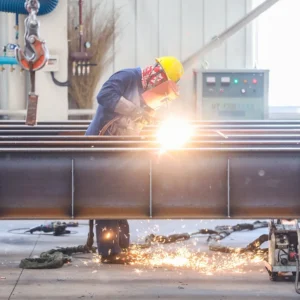
Typical fabrication processes include:
- CNC Cutting: Steel plates and sections are cut according to approved fabrication drawings.
- H-Beam Assembly and Welding: Structural members are assembled and welded to meet specified dimensions and connection requirements. Automated H-beam assembly lines and submerged arc welding (SAW) are commonly used for built-up sections.
- Drilling and Connection Preparation: Bolt holes and connection plates are processed according to approved drawings.
- Shot Blasting and Surface Preparation: Steel surfaces are prepared for the specified protective coating system.
- Painting or Galvanizing: Corrosion protection is applied according to project requirements.
- Inspection and Packaging: Finished components are checked, identified, and prepared for transportation.
Manufacturing Capacity Evaluation Checklist
| Evaluation Item | What Buyers Should Check |
|---|---|
| Production capacity | Available monthly fabrication capacity |
| Fabrication equipment | Cutting, drilling, welding, and surface treatment equipment |
| Component dimensions | Maximum fabrication and handling sizes |
| Quality control | Dimensional inspection and welding inspection procedures |
| Production scheduling | Ability to meet project delivery requirements |
| Documentation | Material certificates, inspection records, and fabrication drawings |
| Current workload | Whether existing orders leave capacity for your project’s schedule |
| Facility verification | Factory audit, live video tour, or third-party inspection report |
For large industrial projects, buyers should also verify whether the manufacturer can organize production and shipment according to the planned installation sequence.
Verify Steel Materials, Welding Quality, and Quality Control
Steel material quality and fabrication accuracy directly influence the structural performance and reliability of a steel building.
Before selecting a manufacturer, buyers should review its material verification, welding control, inspection, and documentation procedures.
Structural Steel Material Standards
Common structural steel grades include:
| Padrão | Typical Steel Grades | Approx. Minimum Yield Strength |
|---|---|---|
| ASTM | ASTM A36, ASTM A572 Grade 50 | 250 MPa (A36), 345 MPa (A572 Gr. 50) |
| European EN | S235, S275, S355 | 235, 275, 355 MPa |
| Chinese GB | Q235, Q355 | 235, 355 MPa |
Yield strength values are nominal and vary with product thickness and grade designation; always refer to the governing standard and the mill certificate.
The required steel grade must be selected according to the structural design, applicable regulations, and project specifications.
Steel grades from different standards are not automatically interchangeable. Material substitutions require engineering evaluation and approval.
Ask the manufacturer to provide mill test certificates for the steel actually used in your order, and confirm which certificate type (for example EN 10204 type 3.1) is included in the quotation.
Welding Quality Control
Welding quality is essential for fabricated structural members and connections.
Buyers should confirm that the manufacturer follows suitable welding procedures and inspection requirements.
Important considerations include:
- Welding procedure specifications
- Welder qualifications
- Weld preparation and execution
- Visual inspection
- Non-destructive testing where required
- Welding inspection documentation
Depending on the project specification, non-destructive testing may include ultrasonic testing (UT), magnetic particle testing (MT), or dye penetrant testing (PT). For projects specified to European or American practice, ask whether welding procedures and welder qualifications follow ISO 3834, EN ISO 9606, or AWS D1.1.
Dimensional Accuracy and Surface Protection
Fabricated steel components should meet the dimensional tolerances specified in the project documents.
Inspection should cover component lengths, hole positions, connection plates, alignment, and other critical fabrication details.
Surface protection should also be evaluated according to the project’s environmental exposure conditions.
Corrosion protection is commonly specified by environment category under ISO 12944, from C1 (very low corrosivity) to C5 (very high, such as coastal or industrial atmospheres). Coastal projects in the Middle East and Southeast Asia, for example, often require a higher category than inland sites. Surface preparation grade (such as Sa 2.5 blast cleaning), coating system, and dry film thickness should be stated in the quotation. Where galvanizing is specified, confirm the applicable standard, such as ISO 1461 or ASTM A123.
For major industrial projects, request an Inspection and Test Plan (ITP) identifying inspection stages, acceptance criteria, and documentation requirements.
Confirm Compliance with International Construction Standards
International steel structure projects must comply with the applicable construction regulations and technical specifications of the destination country.
A reliable supplier should understand the required design, fabrication, welding, and inspection standards.
Common International Steel Structure Standards
| Market | Relevant Standards |
|---|---|
| United States | AISC 360, applicable building codes, AWS D1.1 |
| Europe | Eurocode 3 / EN 1993, EN 1090 where applicable |
| Australia | AS 4100 and applicable AS/NZS standards |
| Middle East | Saudi Building Code (SBC 306 for steel construction), or the code designated by the local authority and project specification |
| South America | Local codes such as ABNT NBR 8800 (Brazil) or CIRSOC 301 (Argentina), often alongside AISC or other specified standards |
| China | Applicable GB structural design and fabrication standards |
The applicable requirements depend on the project location, structural system, building use, and contractual specifications.
Buyers should verify the manufacturer’s ability to meet the required standards and provide the necessary technical documentation.
A quality management certification such as ISO 9001 does not automatically establish compliance with every structural design or fabrication requirement.
For international projects, engineering approval, fabrication compliance, and inspection responsibilities should be confirmed before production.
EN 1090 and CE Marking for European Projects
For structural steel components placed on the European market, EN 1090-1 requires factory production control certified by a notified body, and EN 1090-2 defines execution classes (EXC1 to EXC4) that set the level of fabrication and inspection requirements. If your project is in Europe, ask for the manufacturer’s EN 1090 certificate and check that its scope and execution class cover your project.
Review Experience with Large Industrial Steel Structure Projects
Experience with similar construction projects is an important factor when evaluating steel structure manufacturers.
Large industrial buildings often involve complex structural requirements, extensive fabrication work, and coordination between multiple construction disciplines.
Steel Structure Warehouses
Industrial warehouses often require large clear spans, high ceilings, flexible storage layouts, and coordinated roof and wall systems.
Manufacturers should understand how building dimensions, structural configuration, and storage requirements influence the overall steel structure solution.
Steel Structure Factory Buildings
Manufacturing facilities require structural systems that accommodate production equipment, crane systems, mechanical installations, and operational layouts.
For factories with overhead cranes, the structural design must account for crane loads and other applicable dynamic effects.
Logistics and Distribution Centers
Logistics buildings often prioritize efficient internal space, loading access, structural flexibility, and construction scheduling.
The steel structure system should be coordinated with the building envelope and operational requirements.
Edifícios comerciais e públicos
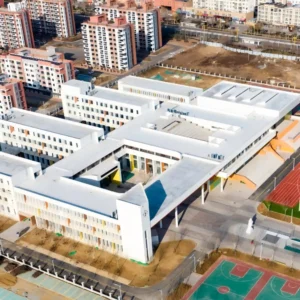
Steel structures are also used for schools, commercial facilities, exhibition buildings, and other public construction projects.
These projects require coordination between structural performance, architectural design, and building services.
What Project References Should You Request?
Ask the supplier for relevant project information, including:
- Project name and location
- Aplicação de construção
- Total construction area
- Structural system
- Steel structure tonnage
- Scope of supply
- Construction photographs
- Available project documentation
Relevant and verifiable project references provide more meaningful evidence than generic building images.
Where possible, ask for a reference contact, shipping documents, or completion records for comparable projects, and check whether the reference projects match your building type, size, and destination market.
Compare Steel Structure Quotations Beyond Price Per Ton
Steel structure quotations vary depending on structural specifications, material grades, fabrication requirements, protective coatings, and supply scope.
Comparing only the quoted price per ton can lead to misleading conclusions.
Steel Structure Quotation Comparison
| Quotation Item | Key Considerations |
|---|---|
| Main steel frame | Columns, beams, rafters, primary framing |
| Secondary structure | Purlins, girts, bracing, tie rods |
| Connections | Bolts, plates, anchor bolts |
| Tratamento de superfícies | Painting, galvanizing, coating specifications |
| Engineering services | Structural calculations, drawings, technical revisions |
| Building envelope | Roof panels, wall panels, insulation |
| Transportes | Packaging, freight terms, shipping arrangements |
| Installation support | Assembly drawings, technical assistance |
What Factors Affect Steel Structure Building Costs?
The main cost factors include:
- Building length, width, and height
- Clear span and column spacing
- Wind, snow, and seismic loads
- Structural steel grade
- Total steel consumption
- Fabrication complexity
- Tratamento de superfícies
- Roof and wall material specifications
- Shipping requirements
- Installation conditions
For an accurate supplier comparison, all quotations should be based on the same project specifications and scope of supply.
A transparent quotation should clearly identify included components, exclusions, technical assumptions, and delivery terms.
Also check whether the price is quoted per ton, per square meter, or as a lump sum, and which Incoterm applies (for example FOB, CFR, or CIF). Two quotations that look similar can differ by a large amount once steel weight, coating, and freight terms are aligned.
Evaluate Export Logistics and Installation Support
For international steel structure projects, fabrication quality must be supported by appropriate packaging, transportation, and project documentation.
Large steel components require careful identification and shipping coordination to support efficient site assembly.
Component Identification and Packaging
Steel components should be marked according to the approved fabrication and erection drawings.
Packaging should protect components during handling and transportation while allowing efficient identification at the construction site.
Shipping and Delivery Planning
Before confirming an order, buyers should discuss:
- Production lead time
- Shipping schedule
- Container or breakbulk transportation
- Component loading arrangements
- Packing lists and shipping documents
- Delivery responsibilities under agreed Incoterms
Members longer than a standard 40-foot container (roughly 12 m internal length) usually require flat-rack, open-top, or breakbulk shipping, which affects freight cost and handling at the destination port. Ask the supplier which loading port it uses (for example Qingdao Port) and how shipments will be sequenced to match erection.
Technical Installation Support
Prefabricated steel buildings are assembled using manufactured structural components and approved connection details.
Installation efficiency depends on fabrication accuracy, drawing coordination, lifting arrangements, and site construction management.
Confirm whether the supplier provides erection drawings, component lists, and technical guidance during installation.
Common Mistakes When Sourcing Steel Structures from China
Choosing the Lowest Price Without Comparing Specifications
A low quotation can exclude engineering services, protective coatings, connection components, or inspection requirements.
Always compare the complete technical and commercial scope.
Providing Incomplete Project Information
Missing building dimensions, structural loads, crane requirements, or roof specifications can result in inaccurate preliminary quotations.
Provide complete project information whenever available.
Ignoring Local Building Regulations
Structural design requirements vary by country and project location.
Confirm applicable standards and approval responsibilities before fabrication.
Failing to Verify Manufacturing Capabilities
Factory capacity, fabrication equipment, inspection procedures, and project references should be verified through suitable documentation or factory audits.
Overlooking Roof and Wall System Coordination
The building envelope affects weather protection, thermal performance, fire performance, and building operation.
Structural framing and enclosure systems should be coordinated during project planning.
Skipping Inspection and Contract Details
Agree in advance on inspection rights, such as witness points or third-party inspection before shipment, and on payment milestones, delivery schedule, and responsibility for drawing revisions. These points are easier to settle in the contract than after fabrication has started.
Why Choose Glostar as Your Steel Structure Manufacturer in China?
Glostar provides steel structure and metal building envelope solutions for industrial and commercial construction projects.
Our product portfolio includes prefabricated steel structures, metal roofing systems, wall cladding systems, and insulated sandwich panels.
By combining structural framing and building envelope products, Glostar supports coordinated material selection and project supply.
Glostar is the export brand of Shandong Apex Metal Products Co., Ltd., a China-based manufacturer serving customers mainly in the Middle East, Southeast Asia, and South America.
Company facts:
- Established: 2014
- Factory area and location: 100000m², Binzhou, China
- Annual steel structure fabrication capacity: 50,000 tonnes
- Certifications: ISO 9001, EN 1090, CE
- Export experience: over 60 countries + 11 years experience
- Representative projects: Heavy Steel Structure Plant Project: the project covers about 9,800 m² and includes two 50-ton overhead cranes for mining and machinery fabrication. The structure meets high-strength and seismic standards. Our company provided detailing, fabrication, and steel supply. * Location: Peru * Area: 9,800 m² * Structural Form: Heavy Steel Frame Structure + Overhead Crane Beam System

Steel Structure Solutions for Industrial Applications
Glostar offers steel structure solutions for industrial warehouses, manufacturing facilities, logistics buildings, and commercial construction projects.
Project requirements are evaluated according to building dimensions, intended applications, structural configurations, and technical specifications.
Integrated Building Envelope Systems
In addition to steel structures, Glostar supplies metal roof and wall systems, including insulated sandwich panels and profiled metal sheets.
This product combination supports coordination between structural framing and building enclosure materials.
Technical and Project Support
Glostar supports customers with product selection, technical communication, drawing coordination, and project-specific material requirements.
For international projects, the scope of engineering, fabrication, supply, and delivery is established according to the agreed project requirements.
Customized Project Solutions
Industrial buildings differ in span, height, structural loads, environmental conditions, and operational needs.
Glostar works with project teams to identify suitable steel structure and building envelope solutions based on project specifications.
What Information Should You Send for a Steel Structure Quotation?
Before requesting a quotation from a steel structure manufacturer, prepare the following information.
| Required Information | Detalhes |
|---|---|
| Project location | Country and city |
| Aplicação de construção | Warehouse, factory, logistics center, commercial building |
| Building dimensions | Length × Width × Height |
| Structural configuration | Clear span, column spacing, number of floors |
| Environmental conditions | Wind, snow, seismic requirements |
| Requisitos relativos às gruas | Capacity, span, lifting height |
| Sistema de cobertura | Metal sheets or insulated roof panels |
| Sistema de paredes | Metal cladding or sandwich panels |
| Tratamento de superfícies | Painting or galvanizing |
| Applicable codes | Design standard required at the project location |
| Delivery requirements | Target schedule, Incoterm, destination port |
| Project documents | Layout drawings, structural drawings, technical specifications |
For more details, read our guide: What Information Is Needed to Quote a Steel Structure Building?.
Providing complete project information helps manufacturers prepare more accurate technical proposals, clarify supply responsibilities, and reduce unnecessary quotation revisions.
Perguntas Frequentes
How do I find a reliable steel structure manufacturer in China?
Evaluate the manufacturer’s engineering capabilities, fabrication facilities, quality control procedures, relevant project experience, and export capabilities. Request technical documentation and compare suppliers based on the same project specifications. A factory audit or third-party inspection adds further confidence.
What documents should a steel structure manufacturer provide?
Typical documentation includes approved fabrication drawings, material certificates, inspection reports, welding documentation, packing lists, and other records required by the project contract.
Can Chinese manufacturers supply steel structures for international projects?
Yes. Chinese manufacturers supply prefabricated steel structures for international construction projects. Buyers should verify that the selected supplier can meet the applicable technical standards, documentation requirements, and destination-country regulations.
What affects the cost of a steel structure building?
Building dimensions, structural loads, steel consumption, material specifications, fabrication complexity, protective coatings, roof and wall systems, transportation, and installation requirements influence the total project cost.
How long does steel structure fabrication take?
Fabrication time depends on project tonnage, structural complexity, material availability, manufacturing capacity, drawing approvals, and inspection requirements. The production schedule should be confirmed for each project.
Can a steel structure supplier provide roofing and wall panels?
Yes. Integrated building material suppliers can provide structural steel components together with metal roofing, insulated sandwich panels, and wall cladding systems. The specific supply scope should be confirmed before ordering.
What is the difference between a steel structure manufacturer and a supplier?
A manufacturer carries out or manages fabrication operations, while a supplier can act as a manufacturer, exporter, distributor, or project integrator. Buyers should confirm which organization is responsible for engineering, fabrication, inspection, and delivery.
What certifications should a steel structure manufacturer in China have?
Common certifications include ISO 9001 for quality management and, depending on the market, EN 1090 for European projects or other certifications required by the project specification. Certification supports supplier evaluation but does not replace project-specific engineering review and inspection.
How can I verify a steel structure manufacturer in China before placing an order?
Review business registration and certificates, request project references with verifiable details, ask for sample inspection records and material certificates, and arrange a factory visit, video audit, or third-party inspection before production and before shipment.
What is the difference between a pre-engineered metal building (PEB) and a conventional steel structure?
A pre-engineered metal building typically uses tapered built-up sections designed to match the load conditions, which can reduce steel weight for standard building types. A conventional steel structure uses hot-rolled or custom-fabricated sections and is often chosen for complex layouts, heavy cranes, or multi-storey buildings. The right choice depends on the project requirements.
Conclusion: Choose a Steel Structure Manufacturer in China Based on Project Requirements
Selecting a reliable steel structure manufacturer in China requires careful evaluation of engineering capabilities, fabrication quality, production capacity, project experience, and delivery responsibilities.
For large industrial warehouses, manufacturing plants, logistics facilities, and commercial buildings, technical compliance and project coordination are essential.
A suitable manufacturing partner should provide clearly defined technical documentation, transparent quotations, appropriate quality assurance, and reliable project communication.
By evaluating these factors before procurement, contractors, EPC companies, developers, and project owners can make informed sourcing decisions and reduce avoidable project risks.
Planning a Large Steel Structure Project?
Get Steel Structure Technical Support & Project Quotation
Glostar provides prefabricated steel structure and metal building envelope solutions for industrial and commercial construction projects.
Share your building dimensions, project location, structural drawings, or technical specifications with our team.
Our team can review your requirements and discuss suitable steel structure and building enclosure solutions.