Hello everyone! I’m a “veteran” in the sandwich panel industry at Glostar, primarily responsible for our wall sandwich panel, painel sanduíche para telhado, e estrutura de aço product lines. Today, I won’t bore you with dry industry statistics. Instead, speaking from the perspective of someone who spends every day on the factory floor and interacting with overseas clients, I want to talk about “China sandwich panels” and just how significant a role they play in the global market.
What exactly is a sandwich panel?
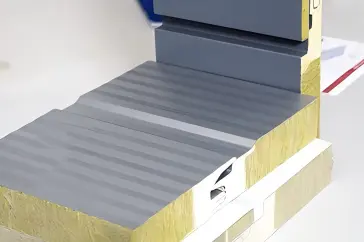
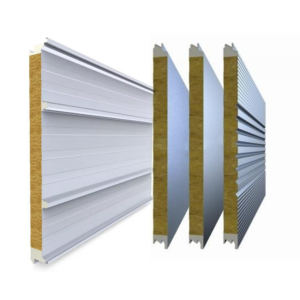
If you aren’t familiar with this product yet, let me give you a quick rundown. Simply put, a sandwich panel features a “sandwich structure”: a layer of thermal insulation core material—such as polyurethane (PU), polystyrene (EPS), or rock wool—is sandwiched between two metal face sheets (which can be color-coated steel or galvanized steel). Combining light weight, high strength, excellent thermal insulation properties, and rapid installation, it is widely used in industrial plants, warehousing and logistics centers, cold storage facilities, cleanrooms, commercial buildings, and even residential projects. Don’t let the simple structure fool you; these metal sandwich panels combine thermal insulation, fire resistance, and decorative qualities, and can even serve as structural envelope materials. This versatility explains why they have become increasingly popular in the global construction materials market in recent years.
Our company focuses on two main categories of sandwich panels—wall sandwich panels and roof sandwich panels—along with complementary steel structures. These three product lines are essentially sold as a package. When a client builds a factory or warehouse, they need a steel structure for the framework, wall sandwich panels for the exterior, and roof sandwich panels for the roofing; it’s a comprehensive set of requirements, so selling them separately would actually be less convenient.
Why has China become a major producer of sandwich panels?
To be honest, this didn’t happen by accident.
First, we have a natural advantage regarding raw materials. China is the world’s largest steel producer, and the supply chains for insulation materials like polyurethane and rock wool are highly mature. Take our factory, for example: by leveraging Shandong’s robust local steel supply network, we can achieve a streamlined, end-to-end production process—from raw steel coils to finished panels. This allows us to effectively control costs and shorten delivery times.
Second, the domestic market has effectively “nurtured” a large number of mature enterprises over the years. China’s rapid urbanization and industrialization over the past two decades created massive demand for light steel structure buildings—ranging from warehousing and logistics facilities to manufacturing plants and agricultural infrastructure. This vast domestic market served as a training ground, compelling manufacturers like us to continuously upgrade production capacity, optimize manufacturing processes, and increase automation levels. It is fair to say that without the solid foundation provided by domestic demand, Chinese sandwich panels would not possess their current level of competitiveness in overseas markets.
Thirdly, the state is actively promoting green building. With the introduction of the “dual carbon” goals, energy-efficient buildings have become a necessity; thanks to their excellent thermal insulation properties, sandwich panels have naturally emerged as a popular alternative to traditional brick-and-concrete walls.
How exactly is the market share distributed?
Let me explain from the perspective of our own business.
Domestic market: Wall sandwich panels and roof sandwich panels are the dominant products.
In the domestic market, sandwich panels are most widely used in industrial and commercial buildings, with wall and roof panels accounting for the lion’s share. Large industrial parks, logistics and warehousing centers, and processing plants typically employ a combination of “light steel structures, wall panels, and roof panels”—a setup favored by business owners for its rapid construction and controllable costs.
Let me touch upon our own product lines:
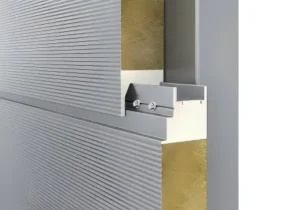
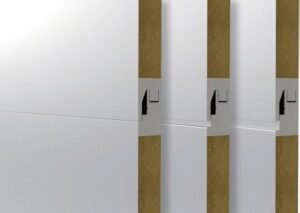
Regarding wall sandwich panels, we typically use color-coated steel or galvanized steel for the facing materials, paired with PU, EPS, or rock wool cores. These offer both thermal insulation and fire resistance, and the exterior color can be customized. They are primarily used for factory exterior walls, cold storage enclosures, and the facades of certain commercial buildings. We place special emphasis on the joint sealing process; after all, clients are most concerned about air or water leakage at the panel joints, and color inconsistency is another common complaint, so we monitor these two aspects very closely.
For roof sandwich panels, we prioritize performance characteristics such as waterproofing, wind uplift resistance, and thermal insulation. The panels are generally designed with corrugated or standing-seam profiles, making them suitable for the roofing systems of industrial plants, warehouses, and large-span buildings. Our profile designs balance structural strength with installation efficiency—simply put, we aim to make on-site installation faster and easier for workers.
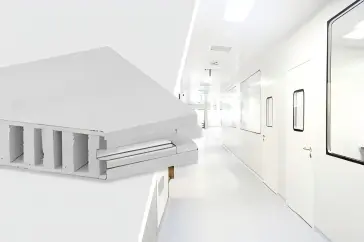
Beyond these two major categories, cold storage panels and cleanroom panels are niche segments that have seen rapid growth in recent years. As the sectors for cold chain logistics, fresh food e-commerce, and pharmaceutical cold chains expand domestically, the demand for cold storage sandwich panels has surged. Similarly, with rising standards for cleanrooms in industries like electronics manufacturing and biopharmaceuticals, the market for cleanroom panels is also steadily gaining momentum. Domestic suppliers have made significant strides in sealing technology and cleanliness standards over the years, gradually replacing the previous reliance on imports.
Steel Structures: A “Package Deal” with Sandwich Panels
I’d like to specifically discuss steel structures here. While many might view sandwich panels and steel structures as separate entities, in actual projects, they are inextricably linked. Consider this: when a client builds a factory or warehouse, the main framework is typically a light or heavy steel structure, while the wall and roof panels serve as the building envelope installed onto that framework; the two are inherently complementary.

This gives companies like ours—capable of both designing and fabricating steel structures and manufacturing wall and roof panels—a distinct advantage when bidding for overseas projects. Clients don’t need to source structural components and panels from different vendors; a single company can handle everything from the main steel framework to the building envelope. This not only offers peace of mind but also significantly reduces project coordination costs and delivery risks. I believe this integrated “steel structure plus sandwich panel” supply model will be a key avenue for Chinese export-oriented manufacturers to boost their competitiveness—a strategy we are actively pursuing ourselves.
Overseas Markets: Steady Growth in Export Share
Let’s turn to the overseas market. The competitiveness of Chinese sandwich panels internationally has grown steadily, driven by cost advantages from large-scale production and significant investment by manufacturers in product certifications. Our target export markets have gradually expanded from price-sensitive regions like Southeast Asia and Africa to include the Middle East and South America.
Take our own export business, for instance; we primarily serve the Middle East, Southeast Asia, and South American markets. Developments such as industrial park construction, logistics and warehousing upgrades, and agricultural infrastructure projects in these regions have generated stable demand for our wall panels, roof panels, and associated steel structures.
The Middle East is a particularly strong market; the hot climate creates a high demand for thermal insulation in buildings. Coupled with the recent surge in industrial parks, logistics hubs, and infrastructure projects, the combined wall and roof panel solution is highly popular there. The situation is similar in Southeast Asia, where the accelerated relocation of local manufacturing and robust demand for foreign-invested factory construction provide a steady source of export growth for us.
Why do clients choose China sandwich panels?
I’ve summarized a few key reasons:
First, the cost-performance ratio offers a genuine advantage. Compared to similar products from Europe and the US, our pricing is more competitive given comparable technical specifications—a major draw for budget-conscious clients.
Second, we are highly responsive to customization requests. Whether it involves panel dimensions, core material types, colors, or thicknesses, our flexible production lines can accommodate specific client needs while shortening delivery times.
Third, one-stop service is becoming the norm. Companies like ours—which go beyond merely selling panels to offer steel structure design, fabrication, and installation guidance—are increasingly common. This enhances the customer experience, naturally leading to higher rates of repeat business and project wins.
Fourth, we are actively pursuing certifications. More Chinese enterprises are proactively seeking international certifications like CE, ISO9001, and ISO14001, which boosts the trust overseas buyers place in us.
To be frank: the industry has its challenges, too.
Of course, I don’t want to paint an overly rosy picture; there are certainly aspects of the industry that cause headaches.
Competition is cutthroat. There is a vast number of domestic manufacturers producing wall and roof painéis sanduíche—ranging from large to small—leading to severe product homogenization. Some smaller factories undercut prices to win orders, which damages the industry’s overall brand image and squeezes profit margins.
Raw material prices are volatile. Materials like steel and polyurethane are heavily influenced by global commodity markets; price fluctuations immediately impact our production costs, making it difficult to manage quotes and profit margins.
We also have to guard against trade barriers. As the scale of Chinese sandwich panel exports grows, some countries and regions may initiate anti-dumping investigations, impose tariffs, or erect technical trade barriers to protect local industries—creating uncertainty for export-oriented companies like ours.
There is still a gap in brand recognition. Honestly, compared to established European building material companies, we have room to improve our brand awareness and penetration into the high-end market overseas. Many clients still associate “Made in China” primarily with “cheap and functional” rather than “premium quality,” so we need to continue cultivating our brand image over time.
What does the future hold?
First, with the global push for green building, energy conservation, and environmental protection, wall and roof sandwich panels with superior thermal insulation will undoubtedly continue to replace traditional building materials; this overarching trend is here to stay. Second, infrastructure development across “Belt and Road” countries continues to advance. For companies like ours—capable of providing integrated “steel structure + sandwich panel” solutions—opportunities are bound to multiply, particularly in Southeast Asia, the Middle East, and South America.
Third, increased investment in R&D is inevitable. We will see the continuous emergence of new core materials, higher fire-resistance ratings, and smarter automated production lines; the industry will gradually shift its focus from competing on price to competing on quality and technology.
Fourth, industry consolidation is only a matter of time. Companies like ours—possessing sufficient scale, comprehensive certifications, and the ability to provide integrated “steel structure + sandwich panel” services—will see our market share grow, while smaller factories lacking core competitiveness will face increasingly difficult times.
In a summary
After discussing all this, the key takeaway is simple: China’s sandwich panel industry has moved far beyond the old, crude model of “driving volume through low prices.” At Glostar, we integrate our three product lines—wall panels, roof panels, and steel structures—leveraging our comprehensive strength in “steel structure + building envelope” systems to steadily establish a foothold in markets across the Middle East, Southeast Asia, and South America.
If you happen to be planning a project for a factory, warehouse, cold storage facility, or other industrial building—whether you need painéis sanduíche para paredes, roof sandwich panels, or a complete steel structure system—please feel free to reach out. We have years of manufacturing experience, and our team can recommend the right panel profiles and solutions tailored to your specific project needs. Even if we don’t end up working together, there is no harm in learning a bit more, right?